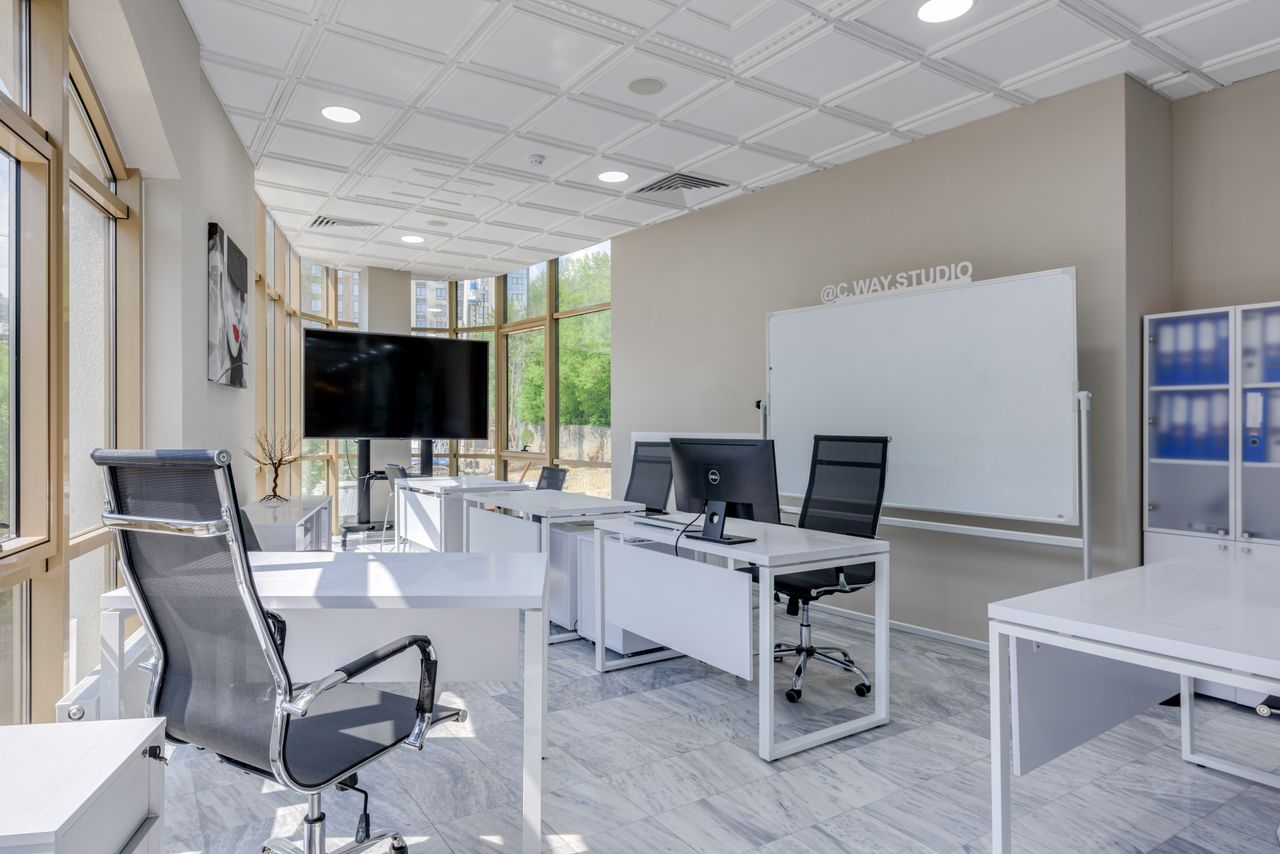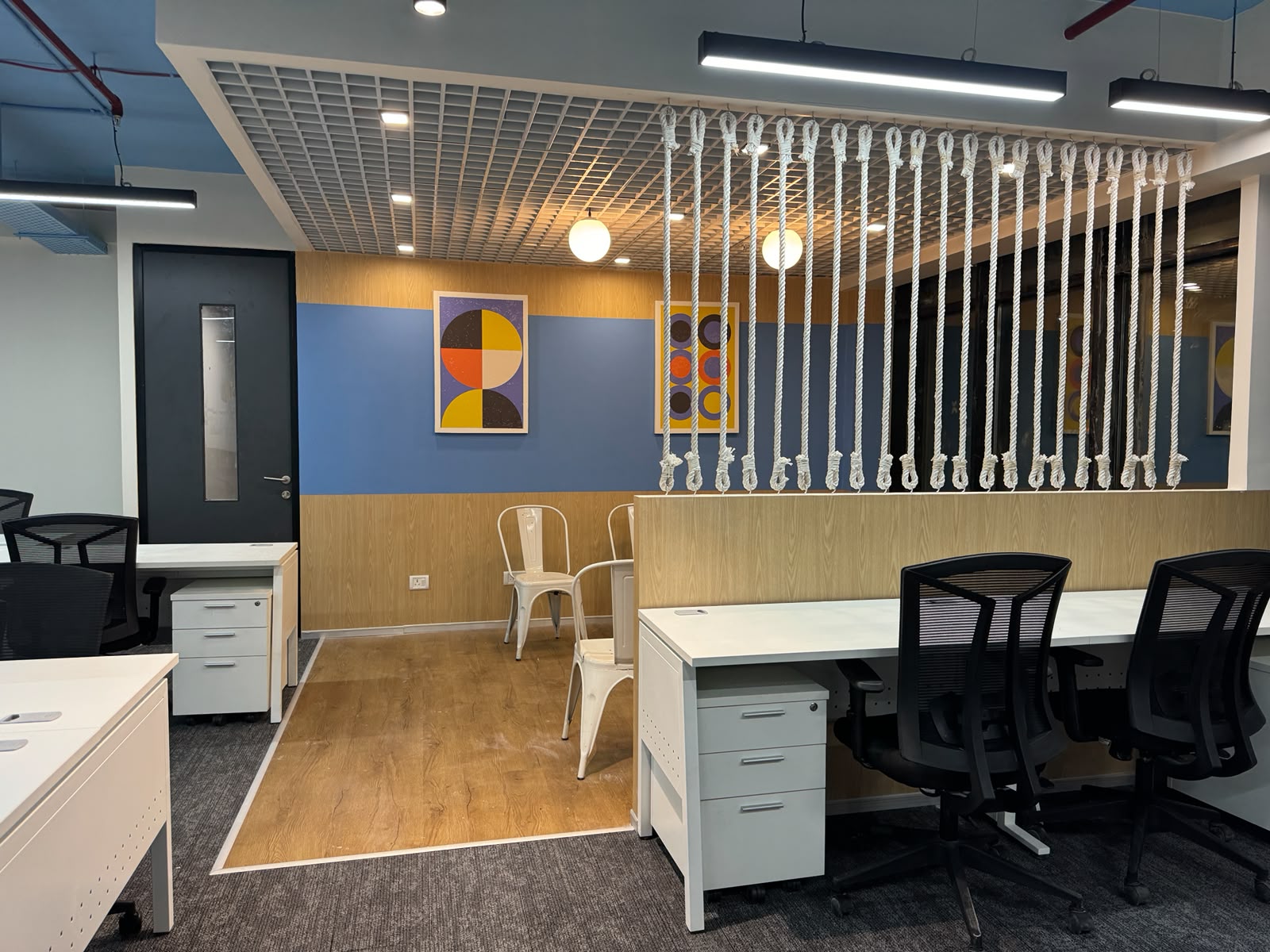


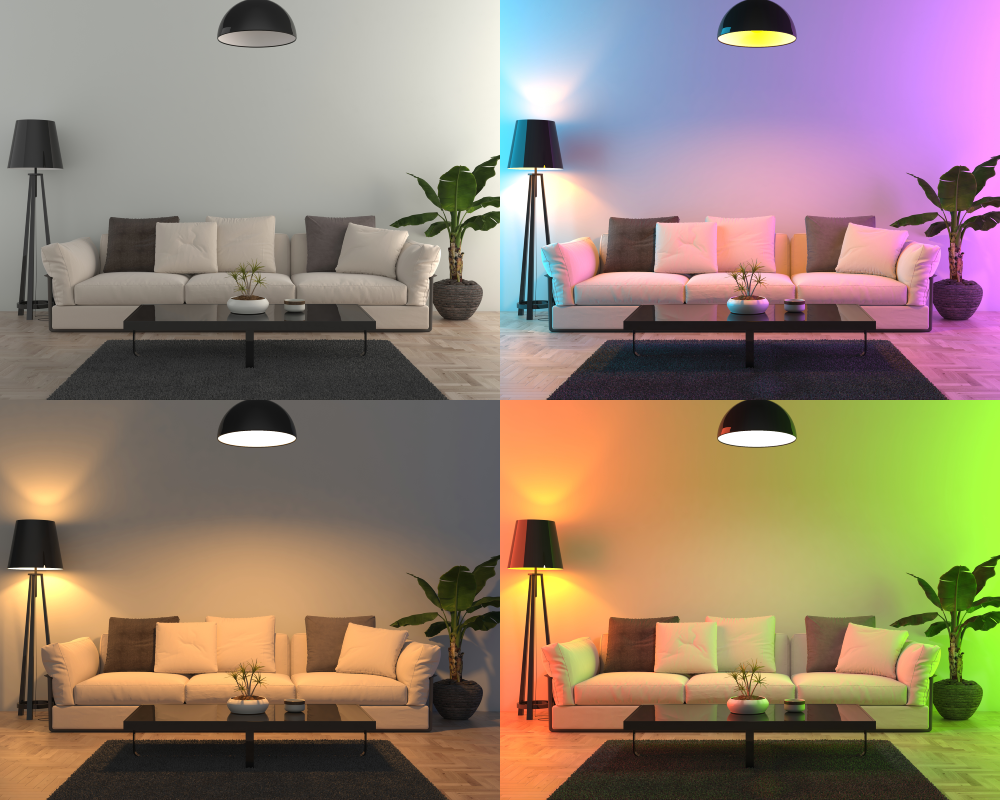
In modern Grade-A commercial workspaces across Delhi NCR—spanning DLF Cyber City, Golf Course Road, Aerocity, and Noida Expressway—lighting is no longer a static mechanical utility operated via conventional wall switches. Lighting constitutes approximately 15% to 22% of a commercial building’s total electricity consumption. Furthermore, research into human workplace ergonomics demonstrates that improper color temperature and static light levels directly induce eye strain, headaches, and afternoon cognitive slumps among employees.
To achieve international environmental ratings—such as IGBC Green, LEED Platinum, and WELL Building Standard v2 —enterprises are transitioning from conventional analog 0–10V circuits to Digital Addressable Lighting Interface (DALI-2) automation. By giving every single luminaire its own digital IP/bus address, corporate facilities gain granular zone control, automated daylight harvesting, presence detection, and dynamic circadian rhythm color tuning (2700K warm to 6500K daylight white).
As premier commercial MEP and turnkey office fit-out contractors in Delhi NCR, BR Creative designs, programs, and commissions intelligent DALI-2 lighting automation systems tailored to executive headquarters, financial trading floors, law chambers, and agile corporate campuses.
1. The Evolution of Office Lighting: Analog 0–10V vs. Digital DALI-2
Comparing traditional dimming against open-protocol digital DALI architecture:
| Evaluation Metric | Traditional Analog (0–10V / Phase Dimming) | DALI-2 Digital Architecture (IEC 62386) |
| Addressing & Granularity | Group/Circuit level only. All fixtures on the same physical wire loop dim identically. | Individual Fixture Addressing: Up to 64 individual drivers per bus channel, grouped purely by software. |
| Wiring Complexity | Requires strict daisy-chaining and heavy separate control conduits back to central dimming racks. | Simplified 2-Wire Topology: Polarity-free, topology-free (tree, star, daisy-chain) 2-core cable (1.5 sq. mm). |
| Two-Way Communication | One-way signal only. System cannot confirm whether a lamp has failed or its power draw. | True Bidirectional Telemetry: Real-time reporting of lamp burnouts, operating hours, and energy metrics to BMS. |
| Reconfiguration Flexibility | Changing desk layouts requires physical rewiring and recutting ceiling conduits. | 100% Software Commissioning: Cabins and open bays can be regrouped via iPad/BMS without ceiling disruption. |
| Circadian (Tunable White) | Extremely complex; requires dual control channels per fixture and separate controllers. | Native DALI Type 8 (DT8) command structure controls intensity and Kelvin color temperature on 1 address. |
2. The Core Operational Strategies of Smart Office Lighting
DALI-2 lighting networks achieve substantial electrical savings and ergonomic improvements through four automated functions:
- Daylight Harvesting (Photo-Sensor Integration): Facade zones in towers like DLF CyberHub or Aerocity receive immense natural light. DALI daylight sensors detect ambient illumination on work desks and continuously throttle linear fixtures down to 20%–40%, ensuring a constant 400–500 LUX task plane while trimming perimeter power consumption.
- Occupancy & Micro-Motion Detection: High-frequency microwave and passive infrared (PIR) occupancy sensors detect subtle hand keystrokes. Meeting rooms, phone booths, and collaborative lounges smoothly ramp down to 10% standby after 5 minutes of vacancy, and shut off after 15 minutes.
- Human Centric Lighting (Circadian Rhythm Tuning): Aligning workplace color temperatures with human biological clocks. Fixtures deliver crisp 5000K–6000K blue-enriched light at 9:00 AM to promote focus and suppress melatonin, transitioning to warm 3000K–3500K indirect light by 5:30 PM to reduce eye fatigue.
- Automated Emergency Lighting Testing: DALI emergency drivers incorporate self-testing batteries. The DALI controller automatically schedules monthly functional discharge tests and logs battery health reports compliant with Delhi Fire Service (DFS) and National Building Code (NBC) norms.
3. Recommended LUX Levels & Lighting Programming Matrix
Calibrating illuminance and color temperatures across corporate floor plates:
| Office Zone | Target LUX (Work Plane) | Color Temp (CCT) | Automation Control Profile |
| Open-Plan Benching Area | 350 – 450 LUX | 4000K – 5000K (Dynamic) | Daylight harvesting + PIR presence zoning; scheduled 7:00 PM ramp-down. |
| Executive CXO Cabins | 400 – 500 LUX | 3000K – 4500K (Tunable) | Scene selection keypads (Work, Meeting, Relax); motorized blind synchronization. |
| Boardrooms & Video Suites | 500 LUX (Desk) / 300 LUX (Face) | 3500K – 4000K (CRI > 90) | Pre-set AV scenes (Presentation, Video Conference, Open Discussion) via touch panel. |
| Cafeteria & Breakout Foyer | 150 – 250 LUX | 2700K – 3000K (Warm) | Circadian ambient dimming; relaxed evening hospitality lighting transition. |
| Corridors & Core Egress | 100 – 150 LUX | 4000K Neutral | Corridor-hold function: minimum 20% background light while adjacent bays are occupied. |
4. Cost Benchmarking: Lighting Automation in Delhi NCR (2026)
Turnkey supply, wiring, and programming cost ranges for Grade-A office fit-outs:
| Automation Infrastructure Level | Estimated Cost Per Sq. Ft. | Deliverables & Technology Deployed |
| Basic Sensor Automation (Analog / PIR) | ₹65 – ₹95 / sq. ft. | Standalone ceiling PIR sensors, 0-10V dimmable drivers, basic corridor time-clock switching. |
| Full DALI-2 Addressable (Recommended) | ₹140 – ₹220 / sq. ft. | DALI-2 addressable drivers, multisensors (PIR + LUX), DALI application controllers, scene keypads, BMS BACnet gateway. |
| Human Centric Circadian (DT8 Tunable) | ₹250 – ₹380 / sq. ft. | DALI DT8 tunable white drivers, circadian schedule processors, luxury glass touch screens, integrated blind automation. |
Why BR Creative Is the Preferred Partner for Lighting Automation
- In-House MEP & Lighting Engineering: Full-time electrical engineers handle complete DIALux photometric simulations, circuit balancing, and DALI bus line design without third-party outsourcing.
- Clash-Free 3D Combined Services Drawings (CSD): Aligning lighting track positions with HVAC diffusers, fire sprinkler drops, and suspended acoustic baffles to eliminate ceiling installation clashes.
- Turnkey Single-Point Accountability: From procurement of Tier-1 drivers (Tridonic, Philips, Helvar) and electrical pulling to scene commissioning and BMS integration under a single contract.
- Fixed-Rate BOQ Cost Certainty: Comprehensive line-item BOQs with locked driver makes and controller specifications protect client budgets against unauthorized variation claims.
5-Phase Turnkey Lighting Automation Roadmap
- DIALux Photometric & Bus Topology Modeling (Days 1–8): Simulating work-plane LUX levels, uniformities ($U_0 \ge 0.6$), Unified Glare Ratings (UGR < 19), and mapping 64-device DALI loop limits.
- Conduit Pulling & 2-Wire DALI Cabling (Days 12–25): Installing low-smoke zero-halogen (FRLS) 2-core control cables alongside primary power circuits in ceiling cable trays.
- Fixture Mounting & Driver Addressing (Days 25–40): Hanging linear pendant profiles, acoustic integrated downlights, and connecting DALI multisensors.
- Software Commissioning & Scene Programming (Days 38–48): Discovering DALI short addresses, grouping zones, tuning circadian color schedules, and calibrating photo-sensors.
- Photometric Audit, BMS Integration & Handover (Final 5–7 Days): Validating physical LUX levels using calibrated lux meters, integrating BACnet gateway with landlord BMS, and staff training.
Frequently Asked Questions (FAQs)
Q1. What is the payback period for investing in a DALI-2 lighting automation system?
In a corporate office running 10 to 12 hours daily in Delhi NCR, the combination of daylight harvesting, PIR presence dimming, and efficient LED drivers yields a 30% to 40% reduction in lighting electrical draw. The typical capital payback period ranges between 18 to 26 months.
Q2. Can DALI lighting automation be integrated with building management systems (BMS)?
Yes. Modern DALI application controllers feature native BACnet/IP or Modbus gateways. This allows building management teams to monitor live power consumption, track luminaire operating hours, receive instant failure alerts, and execute global overrides from the landlord’s master BMS dashboard.
Q3. Does DALI control wiring require specialized shielded cabling?
No. Unlike RS-485 networks, DALI operates on a robust, low-speed digital signal (1200 baud, 16V DC) with high noise immunity. It utilizes standard 2-core mains-rated insulated copper cable (1.5 sq. mm), allowing control lines to run in the same conduit or cable tray as standard 230V AC mains without electromagnetic interference.
Q4. How does DALI automation help in achieving LEED and WELL building certifications?
DALI contributes directly to LEED Energy & Atmosphere credits via automated daylight dimming and sub-metering telemetry. For WELL certification, DALI Type 8 tunable white fixtures fulfill Circadian Lighting Design requirements by replicating natural daylight spectra to support human sleep-wake cycles.
Q5. How can facility directors book a lighting automation audit with BR Creative?
Corporate occupiers, CFOs, and facility directors can connect directly with BR Creative through their official website or corporate helpline to schedule an on-site lighting audit, DIALux photometric design simulation, and receive an itemized turnkey BOQ proposal.
Conclusion
Intelligent lighting automation is the union of visual elegance, biological well-being, and aggressive energy conservation. Partnering with seasoned commercial office lighting automation and DALI control contractors in Delhi NCR like BR Creative guarantees precision photometric engineering, seamless BMS integration, and rapid turnkey delivery strictly on time and within budget.